UV Curing for Automotive & EV Electronics: ADAS, Battery and BMS Assembly
How UV and UV LED curing systems solve the toughest bonding, coating and encapsulation steps in automotive and EV electronics — from ADAS camera active alignment to battery-pack protection — with the process control automotive quality demands.
The automotive electronics market is growing 6–7% a year, and the ADAS and electrification segments are growing far faster. Every new camera, radar, lidar, sensor and battery module adds bonding, coating and encapsulation steps — and each of those steps has to survive vibration, thermal cycling and years in a harsh environment while meeting automotive Cpk and traceability requirements. That is why more automotive lines are moving from solvent-based materials and mechanical fasteners to UV curing: it cures in seconds, adds almost no heat, and — with the right equipment — stays inside a validated process window batch after batch.
This guide walks through where UV curing fits in automotive and EV electronics, and what to look for in a curing system. A note on scope: ETIA supplies the UV curing equipment. The adhesives, conformal coatings and encapsulants are your material — we help you cure your chemistry reliably and validate the process around it.
Why automotive lines switch to UV curing
Traditional bonding and protection methods — two-part epoxies, solvent-based coatings, mechanical fasteners — are slow, add cost, and often need ovens or long fixturing. UV-curable materials cure on demand when light hits them, which gives an automotive line four things it cares about:
- Speed — cure in seconds instead of minutes or hours; takt times drop
- Cool processing — minimal heat into heat-sensitive sensors, optics and boards
- Solvent-free — 100%-solids chemistry, no drying ovens, no VOC handling
- Process control — modern systems monitor and log output, so a validated cure stays validated across a production run
The catch is that all of those benefits depend on delivering the same UV dose to every part. Cure quality is decided by the equipment, not just the material — which is where system selection matters.
Where UV curing fits in automotive electronics
Across ADAS, infotainment and battery systems, UV-curable materials fall into a few families, and each puts a different demand on the curing equipment:
- Adhesives — bond dissimilar materials (plastic, metal, glass) in seconds with high-strength, environmentally resistant joints; ideal where mechanical fasteners can't reach
- Conformal coatings — protect PCBs from heat, humidity, salt, sulfur and automotive fluids; a 100%-solids UV coating replaces solvent-based material and long oven dwell
- Encapsulants / potting — protect bare die, wire bonds and ICs against thermal shock and corrosion
- Masking resins — temporary, peelable board protection during coating or solder steps
The common thread: fast, repeatable, low-heat cure. The rest of this guide covers the three highest-value automotive applications.
ADAS camera & lidar: active alignment
Camera modules for ADAS are the most demanding UV-cured step in the vehicle. The lens must be positioned inside the housing and then locked at the exact focused position — with zero focus drift after cure. The industry has moved away from passive alignment (mechanical clips), which can let the lens shift, tilt or defocus.
UV-curable adhesives enable active alignment: the lens is positioned with optical feedback to accuracy better than 0.1 mm, held while a UV system cures the bond in seconds, and only released once locked. Because polymerization doesn't start until the light is on, the assembly can be adjusted right up to the moment of cure. The same principle applies to lens-to-housing bonding, IR filter bonding, image-sensor staking and lidar sensor assembly.
What the curing system has to deliver here:
- Focus-lock stability — consistent dose so cure shrinkage is uniform and the lens does not shift as the adhesive contracts
- Cool output — image sensors and lidar optics are heat-sensitive; UV LED runs cool
- Spot precision — small bond sites need a controllable spot with a light guide
A closed-loop spot system (such as the OmniCure S2000 Elite) holds output within ±5% of set point across millions of cycles, giving the dose repeatability that focus-lock and automotive Cpk demand. For cool, instant-on curing of heat-sensitive sensor assemblies, a UV LED spot such as the OmniCure LX500 is the usual choice.
Shadow areas: the high-density board problem
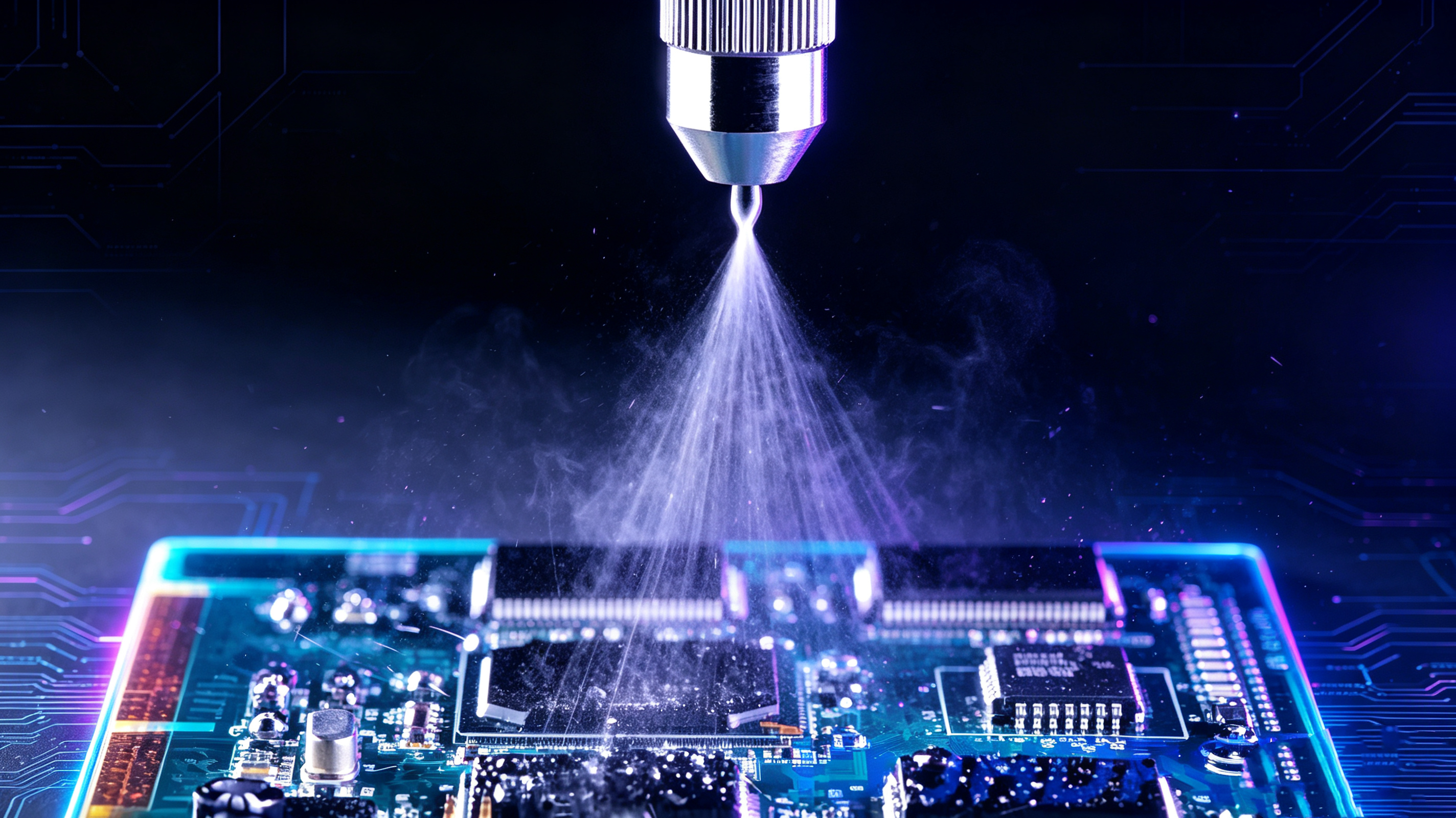
Automotive PCBs are dense, and tall components cast shadows where light can't reach — a real risk with conformal coatings, because uncured material under a shadow is a latent field failure. There are two ways a curing process handles this, and both start with getting maximum, uniform light onto the board:
- Area curing with high uniformity — a wide, even UV field reaches into as much of the board as possible in a single pass
- Dual-cure materials — your coating can be formulated so shadowed areas finish curing by a secondary mechanism (moisture or heat), removing the need for a second process step
The equipment's job is to deliver a uniform, validated dose across the whole board area. Validate coverage with radiometric mapping across the full cure zone, not just at the lamp face — the highest-uniformity area systems are what make edge-to-edge cure repeatable on large boards.
EV battery packs & BMS
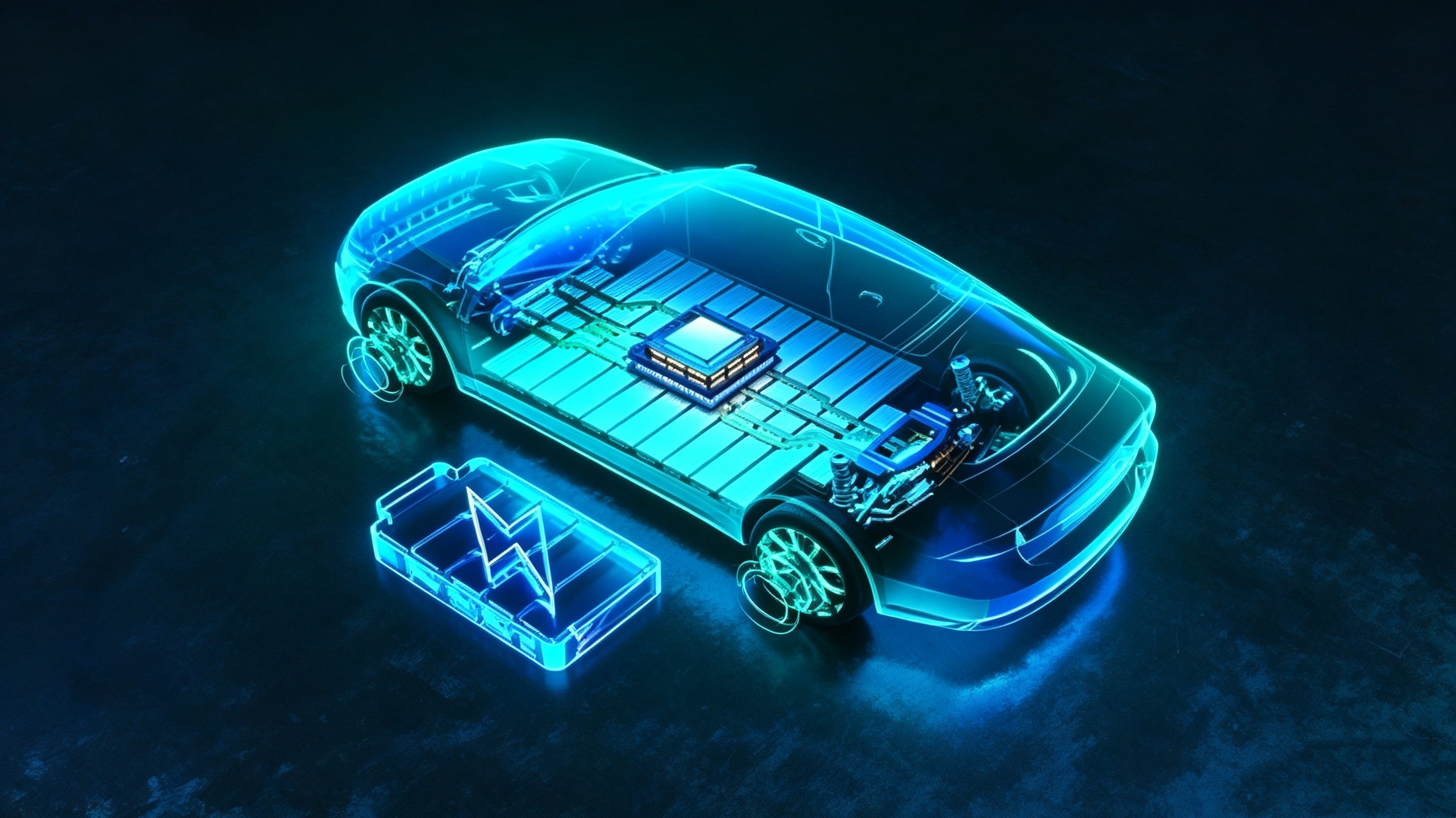
The EV battery pack — cells, module housings, and the battery management system (BMS) — uses UV curing for potting and wire bonding of modules, conformal coating of BMS PCBs, sealing of case enclosures, and bonding of cylindrical li-ion cells into plastic housings. These parts demand high-strength structural bonds and reliable protection against thermal shock, humidity and corrosion, all without heating the sensitive cells.
Two equipment considerations dominate here:
- Dose, not just irradiance — thick coatings and potting need enough UV energy (mJ/cm²) to cure in depth, not just high peak intensity (W/cm²). Validate the dose.
- Cooling for continuous lines — high-speed electrode and module lines usually favor water-cooled area systems for continuous output; air-cooled area systems cover wide zones without chillers.
Why UV LED suits automotive
Across all three applications, UV LED curing has become the default for new automotive lines because it is a "green," production-friendly technology:
- High electrical efficiency and instant on/off — lower operating cost
- Long service life — no bulb replacement, less maintenance
- Compact — drops straight into automated assembly cells
- Cool output — protects heat-sensitive sensors, optics and cells
- Mercury-free — no mercury or ozone handling
- Narrow-band emission — minimizes substrate thermal rise
Lamp-based broad-spectrum systems still have a place where your material needs a wide spectrum or short-wave energy for a tack-free surface — which is exactly the kind of match ETIA engineers verify before you commit.
Verifying the cure
Automotive quality means proving every cure. Two practices matter:
- In-process dose measurement — use a calibrated radiometer (such as the R2000/LS200) each shift so a validated dose stays inside the automotive process window across months of production.
- Visual cure confirmation — many materials are formulated to fluoresce or change color when cured, so automated vision systems can confirm complete cure and detect shadowed, uncured areas. That is a material property, but your equipment has to deliver the consistent dose that makes the confirmation meaningful.
How to choose — the short version
- Match wavelength to your material's photoinitiator — most automotive adhesives and coatings respond at 365–405 nm
- Spot or area? — focus-lock camera bonding is spot; conformal coating and battery-pack protection are area
- Validate dose (mJ/cm²), not just irradiance — especially for thick potting and coatings
- Design for shadows — high-uniformity area curing plus, where needed, a dual-cure material
- Plan verification — radiometry per shift, plus visual cure confirmation, keeps the process auditable
The fastest path is not to buy a system first — it's to test your actual parts and material. ETIA runs cure trials with automotive customers across Thailand, Vietnam and Southeast Asia, then recommends a configuration only once the process is proven.
Where to go next
- Browse the application case studies for ADAS camera, sensor and battery process detail
- Compare UV curing systems across spot, area and LED platforms
- Have a specific automotive bonding, coating or potting step to validate? Talk to an ETIA engineer — tell us your material, substrate and takt time, and we'll take it from there.
ETIA supplies genuine OmniCure equipment through authorized channels. We supply and support the curing equipment; the adhesives, coatings and encapsulants remain your material.
Have a UV curing challenge?
Our engineers match the right system to your exact process — from selection to validation.