
What Is UV Curing? Principle, Advantages and Applications
UV curing is a photochemical process: a photoinitiator absorbs UV light, generates free radicals and triggers crosslinking, turning liquid into solid in seconds. 100% solids, no VOCs.
What Do UVA, UVB and UVC Each Do in Curing?
UVC is absorbed at the surface and overcomes oxygen inhibition; UVA penetrates deepest for uniform crosslinking through the coating; 405 nm near-visible light suits thick and pigmented systems.
Why Must the Photoinitiator and the Light Source Spectrum Match?
A photoinitiator absorbs only specific wavelengths; if the source spectrum does not overlap its absorption spectrum the reaction never starts. Mercury lamps suit almost any formulation; UV LEDs need LED-grade chemistry.
Irradiance vs Dose: Why Enough Dose Can Still Give a Poor Cure
Peak irradiance (W/cm²) determines cure speed and depth; dose (J/cm²) determines whether enough energy was delivered. The same dose at different irradiance gives a different crosslink network.
What Is Oxygen Inhibition and How Do You Fix a Tacky Surface?
Oxygen at the coating-air interface scavenges free radicals and leaves the surface tacky. Four remedies: raise irradiance, nitrogen inerting, add UVC for a fast skin, or an inhibition-resistant formulation.
Mercury Lamp or UV LED: How to Choose
Mercury lamps are 200-600 nm broad-spectrum sources compatible with almost any formulation and provide UVC; UV LEDs are single-wavelength, low-energy, tens of thousands of hours, no infrared heat or ozone.
Spot Curing vs Area Curing: What Is the Difference?
Spot curing focuses light into a millimeter-scale spot at very high peak irradiance for precision adhesive points; area curing uses an emitting window from tens of millimeters to over a meter.
Air-Cooled or Water-Cooled UV LED: How to Choose
Air-cooled UV LEDs need no chiller, integrate fastest at the lowest cost; water-cooled deliver higher power, tolerate extreme temperature and dust, run quietly and reach 1.35 m in one unit.
Why UV Curing Needs Process Control: Closed-Loop Feedback and Exposure Programs
Light source output drifts with time and temperature and no operator can guarantee dose piece by piece. Process control solves it in three layers: source stability, programmed exposure and traceability.
What Is a UV Radiometer and Why Must a Curing Process Be Calibrated?
A UV radiometer is the only way to turn nominal equipment values into actual process values. Mercury and LED sources need differently calibrated instruments, measured at the real cure position.
Same Standard, Local Speed: ETIA's Service Commitment in Thailand
ETIATECH (THAILAND) backs its OmniCure UV curing systems with a local warehouse, a local engineering team and the same service commitment as our headquarters — genuine products, application support and long-term service, in Thailand.
Same Standard, Local Speed: ETIA's Service Commitment in Vietnam
ETIA-TECH VIET NAM backs its genuine OmniCure UV curing systems with a local warehouse, a local engineering team and the same service commitment as our headquarters — genuine supply, application support and long-term service, in Vietnam.

UV Curing for Aerospace & Defense Electronics: Avionics, Sensors and Space-Grade Assembly
How UV and UV LED curing systems support avionics PCB protection, sensor-module assembly and space-grade electronics — meeting the low-outgassing, self-extinguishing and traceability standards aerospace and defense demand.

UV Curing for Automotive & EV Electronics: ADAS, Battery and BMS Assembly
How UV and UV LED curing systems solve the toughest bonding, coating and encapsulation steps in automotive and EV electronics — from ADAS camera active alignment to battery-pack protection — with the process control automotive quality demands.
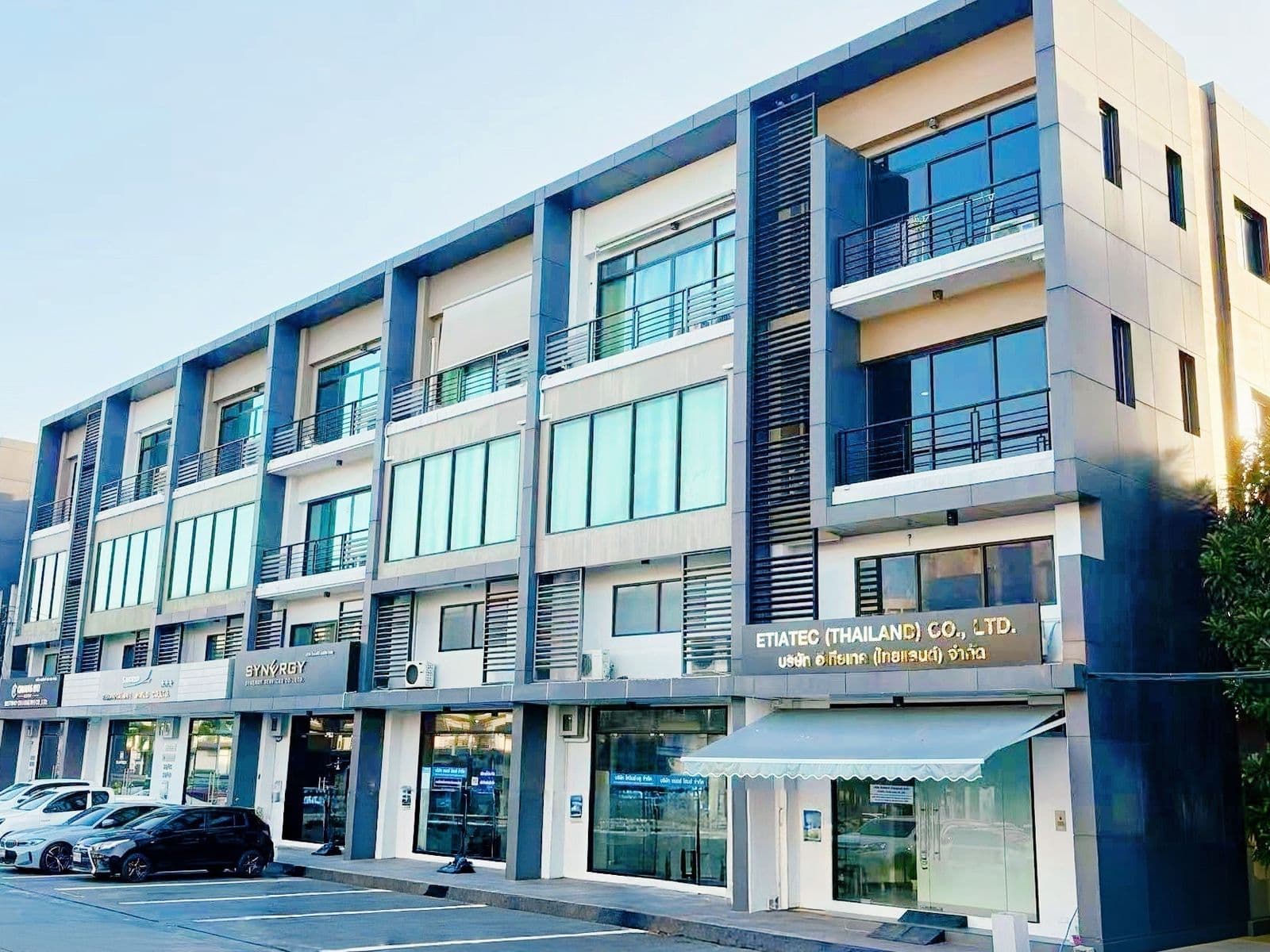
ETIA Launches Thailand Operations as Authorized OmniCure Distributor
ETIATECH (THAILAND) Co., Ltd. — appointed by Excelitas — brings genuine OmniCure UV curing systems, local stock, installation and Thai-language support to manufacturers across Thailand.

OmniCure S2000 Elite Genuine Lamp Modules Now Available from ETIA
Buy genuine OmniCure S2000 Elite lamp modules through authorized channels. ETIA supplies 012-68000R, 012-69000R and S2000 replacement lamps.
How to Choose the Right OmniCure S2000 Elite Lamp and Optical Filter
Standard or Surface Cure? Which band-pass filter? A practical guide to matching the OmniCure S2000 Elite lamp module (012-68000R / 012-69000R) and optical filter to your adhesive and process.

Troubleshooting the OmniCure S2000: Lamp Not Striking, Light-Ring Colours & Low Irradiance
A field guide to the three most common OmniCure S2000 issues — a lamp that won't strike, what the status light-ring colours mean, and irradiance that drops off — with the checks that fix them.

UV Curing for Co-Packaged Optics (CPO): The 2026 Manufacturing Guide
Co-packaged optics demands the tightest fiber-bonding tolerances in commercial photonics. Here is how UV curing controls sub-100 nm alignment as the CPO market scales rapidly through the end of the decade.
Have a UV curing challenge to solve?
Tell us your material, curing area, wavelength and production requirements. ETIA engineers will help you find the right solution.